Many content writers struggle with one key question: how long should an SEO article be? Some posts are too short to compete, while others become long without purpose.
This is where word count tools for SEO help. They guide you in planning content length based on search intent, competitor analysis, and topic depth. They don’t improve rankings directly, but they help you build stronger, more complete content that performs better in search.
What Are Word Count Tools for SEO?
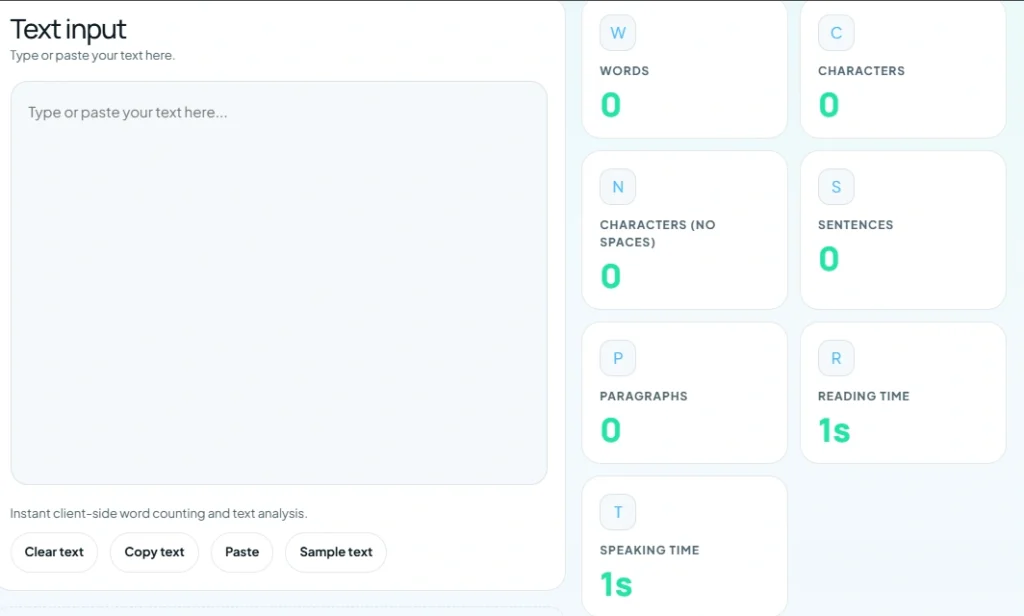
Word count tools for SEO are tools that measure and track the length of your content. Some advanced tools also help you compare your article length with top-ranking pages.
They are commonly used to:
- Set content length goals before writing
- Check competitor content size
- Improve structure and balance
- Avoid underdeveloped articles
Word count tools for SEO help writers measure and plan content length based on search intent and competitor benchmarks. They improve planning and structure but are not a direct ranking factor.
Why Word Count Matters in SEO Strategy
Word count does not directly influence Google rankings. However, it strongly affects how complete and useful your content is.
Longer, well-structured content often performs better because it:
- Covers topics in more detail
- Matches user search intent more accurately
- Targets multiple related keywords
- Builds stronger topical authority
Word count is not a ranking factor, but it influences content depth and relevance, which can indirectly improve SEO performance.
How Word Count Tools Support SEO Planning
Word count tools become powerful when used before and during writing-not after.
They help you:
- Analyze top-ranking pages
- Identify average content length
- Set a realistic target word range
- Track progress while writing
Example workflow:
If top results average 2,000 words, you can:
- Plan around 1,800–2,300 words
- Ensure full topic coverage
- Avoid missing key subtopics
Key Benefits of Using Word Count Tools for SEO
Using word count tools for SEO improves both planning and execution.
Main benefits:
- Helps define clear writing targets
- Improves content structure and flow
- Prevents thin or incomplete articles
- Supports better SEO competitiveness
- Saves time in editing and rewriting
Instead of guessing, you work with clear data from the start.
Common Mistakes When Using Word Count Tools
Many writers misuse word count tools and focus only on numbers.
Avoid these mistakes:
- Writing extra content just to increase word count
- Ignoring search intent
- Copying competitor length without analysis
- Adding filler paragraphs to reach targets
- Skipping structure planning
Good SEO content is about completeness, not length.
Word Count Tools vs Manual Planning
| Method | Strength | Weakness | Best Use |
|---|---|---|---|
| Word Count Tools | Fast and accurate | No context alone | Content planning |
| Manual Estimation | Flexible | Inconsistent | Small projects |
| SERP-Based Analysis | Highly accurate | Time-consuming | SEO strategy |
Using tools with SERP analysis gives the best results.
How to Use Word Count Tools for Better SEO Results
To get better SEO performance, follow this simple process:
- Step 1: Find your target keyword
- Step 2: Analyze top-ranking pages
- Step 3: Identify average word count
- Step 4: Set your content range
- Step 5: Write with structure and intent
This approach ensures your content is not just long-but complete and competitive.
Frequently Asked Questions
Do word count tools improve SEO rankings?
No. They do not directly affect rankings, but they help improve content structure and quality.
What is the ideal word count for SEO content?
Most competitive blog posts perform well between 1,800 and 2,500 words.
Can short content rank on Google?
Yes, if it fully satisfies user intent and provides clear value.
Should I match competitor word count exactly?
No. Focus on covering the topic better, not just matching length.
Are word count tools necessary for SEO?
They are not required, but they significantly improve planning accuracy.
Conclusion
Word count tools for SEO are not about writing more-they are about writing smarter.
When used correctly, they help you plan structured, complete, and competitive content that matches search intent. Combined with SERP analysis and keyword research, they become a powerful part of any SEO workflow.
Start using them as a planning system, not just a counter, and your content quality will improve noticeably.